How Many Boxes Can a Flexographic Machine Produce? A Practical Guide to Choosing Based on Your Production Volume
KIT Machinery — 2026-06-26
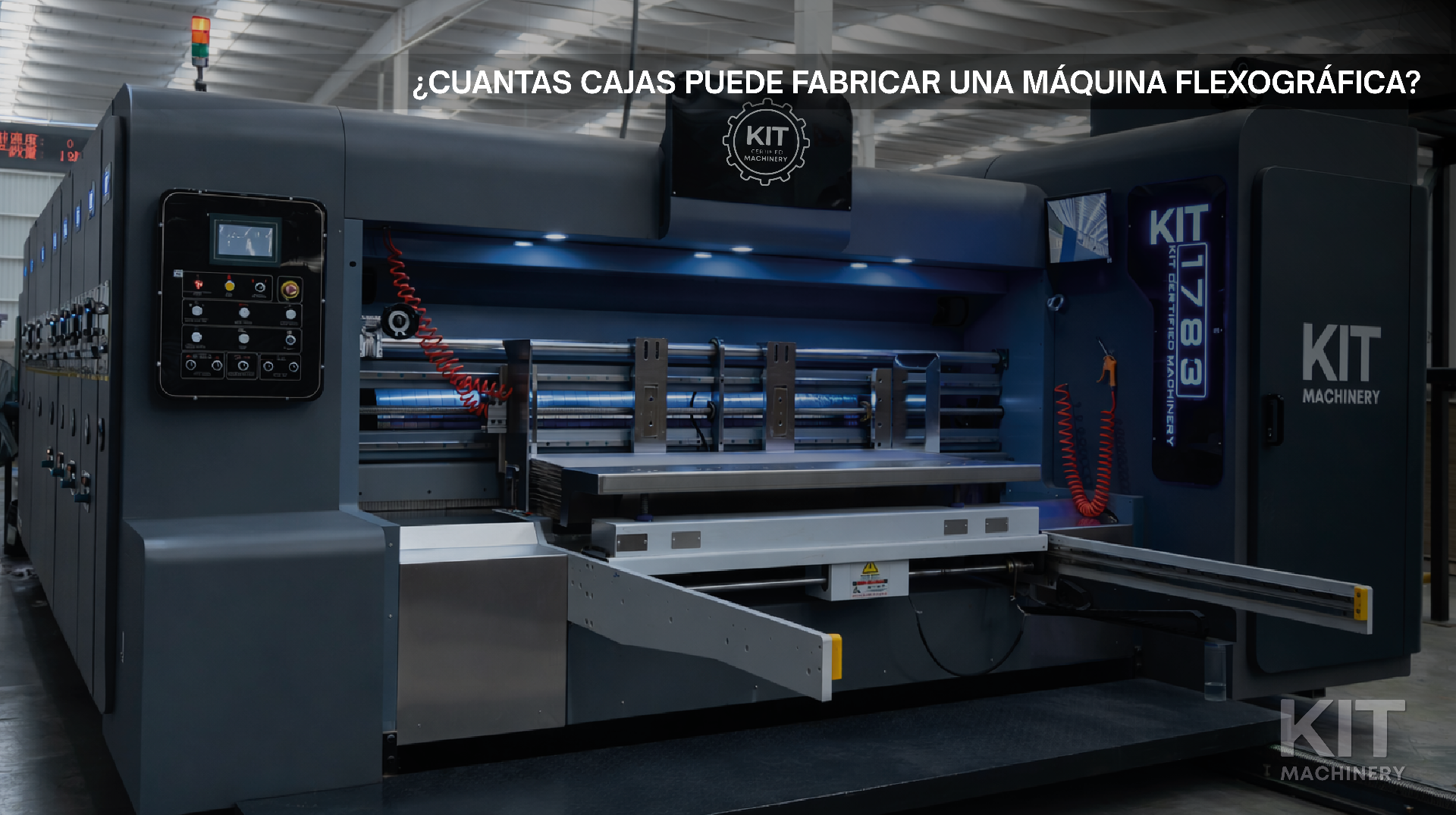
In the corrugated packaging industry, one of the most important questions before investing in equipment is:
How many boxes can this machine actually produce?
The answer is not as simple as looking at the maximum speed listed in a catalog. Real production depends on several factors: feeding system, operator experience, number of printing colors, cutting configuration, box size, board quality, installed accessories, and the level of automation in the line.
That is why it is better to evaluate each machine not only by its “boxes per minute” capacity, but also by how it fits your real production needs.
In this guide, we explain the main differences between three key types of flexographic machines used in corrugated box production: chain-fed flexographic machines, automatic suction-feed flexo printers, and flexo folder gluers. We will also cover non-printing die cutters and how to estimate real production per shift.
You can also explore KIT Machinery’s solutions for corrugated packaging machinery and industrial equipment for box manufacturing.
Table of Contents
What does production capacity really mean?
Production comparison by machine type
Chain-fed flexographic machine: flexible production with more operator involvement
Chain-fed flexo with automatic feeder: a more stable feeding process
Automatic suction-feed flexo printer: stable speed and better print quality
Flexo folder gluer: a fully automated line for high-volume production
Non-printing die cutters: productivity focused on cutting and forming
How to calculate real production per shift
Common mistakes when comparing machine speeds
Which machine should you choose based on your volume?
Frequently asked questions
1. What does production capacity really mean?
When a machine is rated at 120, 180, or more than 220 boxes per minute, that number usually represents a reference speed under controlled conditions.
In real production, the actual output may vary depending on:
operator skill;
feeding system;
board quality and flatness;
number of printing colors;
slotter or die-cutting configuration;
box size;
setup changes;
cleaning time;
operational stops;
end-of-line accessories.
That is why it is important to distinguish between three different concepts:
Maximum capacity: the highest speed the machine can reach under ideal conditions.
Average operating speed: the speed at which the machine usually runs with stable quality.
Real production per shift: the number of usable boxes produced after considering setup time, adjustments, stops, and operating conditions.
According to FEFCO, flexographic printing is one of the most common methods used in corrugated packaging production. Organizations such as TAPPI and the Fibre Box Association are also key references for understanding the role of corrugated packaging in modern supply chains.
2. Production comparison by machine type
Chain-fed flexographic machine
Feeding system: Manual chain feeding
Reference capacity: Depends on the operator
Estimated production per 8-hour shift: 10,000 to 12,000 boxes in efficient manual operation
Best suited for: Plants looking for flexibility and an accessible entry point
Chain-fed flexo with automatic feeder
Feeding system: Automatic feeding
Reference capacity: Up to 120 boxes/min
Estimated production per 8-hour shift: Up to 57,600 boxes per continuous shift
Best suited for: Companies that want to increase speed without replacing the entire line
Automatic suction-feed flexo printer, Model 1971
Feeding system: Automatic suction feeding
Reference capacity: Maximum 180 boxes/min
Estimated production per 8-hour shift: Average of 57,600 to 62,400 boxes when running at 120–130 boxes/min
Best suited for: Medium-to-high production with stable print quality
Flexo folder gluer
Feeding system: Fully automated line
Reference capacity: More than 220 boxes/min
Estimated production per 8-hour shift: More than 105,600 boxes per continuous shift
Best suited for: High-volume plants looking for integrated automation
Non-printing die cutter
Feeding system: Manual or automatic, depending on configuration
Reference capacity: Similar to the selected feeding system
Estimated production per 8-hour shift: Shifts depending on accessories and die-cutting complexity
Best suited for: Processes that require cutting or forming without printing
3. Chain-fed flexographic machine: flexible production with more operator involvement
A chain-fed flexographic machine is one of the most flexible options for corrugated packaging plants that need to print, slot, cut, or die-cut boxes while maintaining a more accessible investment level.
This type of machine can be configured with:
chain feeder;
one to three printing colors;
slotter;
die-cutting section;
hybrid slotter;
Stacker at the end of the line.
Its main characteristic is that the feeding process depends directly on the operator. For that reason, production speed is not determined only by the machine, but also by the operator’s ability to feed sheets consistently, safely, and accurately.
In efficient manual operation, some plants can reach approximately 10,000 to 12,000 boxes in an 8-hour shift. However, this number may vary depending on operator experience, box size, board quality, and job complexity.
When does a chain-fed flexographic machine make sense?
A chain-fed flexo can be a good option when your company needs to:
start or expand printed box production;
work with different box formats;
keep the initial investment more accessible;
produce medium volumes;
Maintain flexibility without moving into a fully automated line.
For many plants, this type of machine is the first step toward professionalizing corrugated box production before moving into higher-speed automated systems.
4. Chain-fed flexo with automatic feeder: a more stable feeding process
A chain-fed flexographic machine can also be upgraded with an automatic feeder. This accessory reduces dependency on the operator and helps establish a more consistent production speed.
With an automatic feeder, this type of line can reach up to 120 boxes per minute, depending on the configuration, box format, and process stability.
This makes a significant difference compared to manual feeding, because the machine can run at a more controlled and consistent pace.
Theoretical production with automatic feeding
If the machine runs at 120 boxes per minute:
120 boxes/min x 60 minutes = 7,200 boxes per hour
7,200 boxes/hour x 8 hours = 57,600 boxes per continuous shift
In real production, this number may decrease due to setup changes, adjustments, cleaning, initial testing, and operational pauses. Even so, adding an automatic feeder can significantly increase productivity compared to manual feeding.
When should you add an automatic feeder?
An automatic feeder is especially useful when the plant already has enough demand and the main bottleneck is sheet feeding.
If the operator cannot maintain the pace that the machine is capable of, automating the feeding process can be one of the fastest ways to increase volume without replacing the entire line.
5. Automatic suction-feed flexo printer: stable speed and better print quality
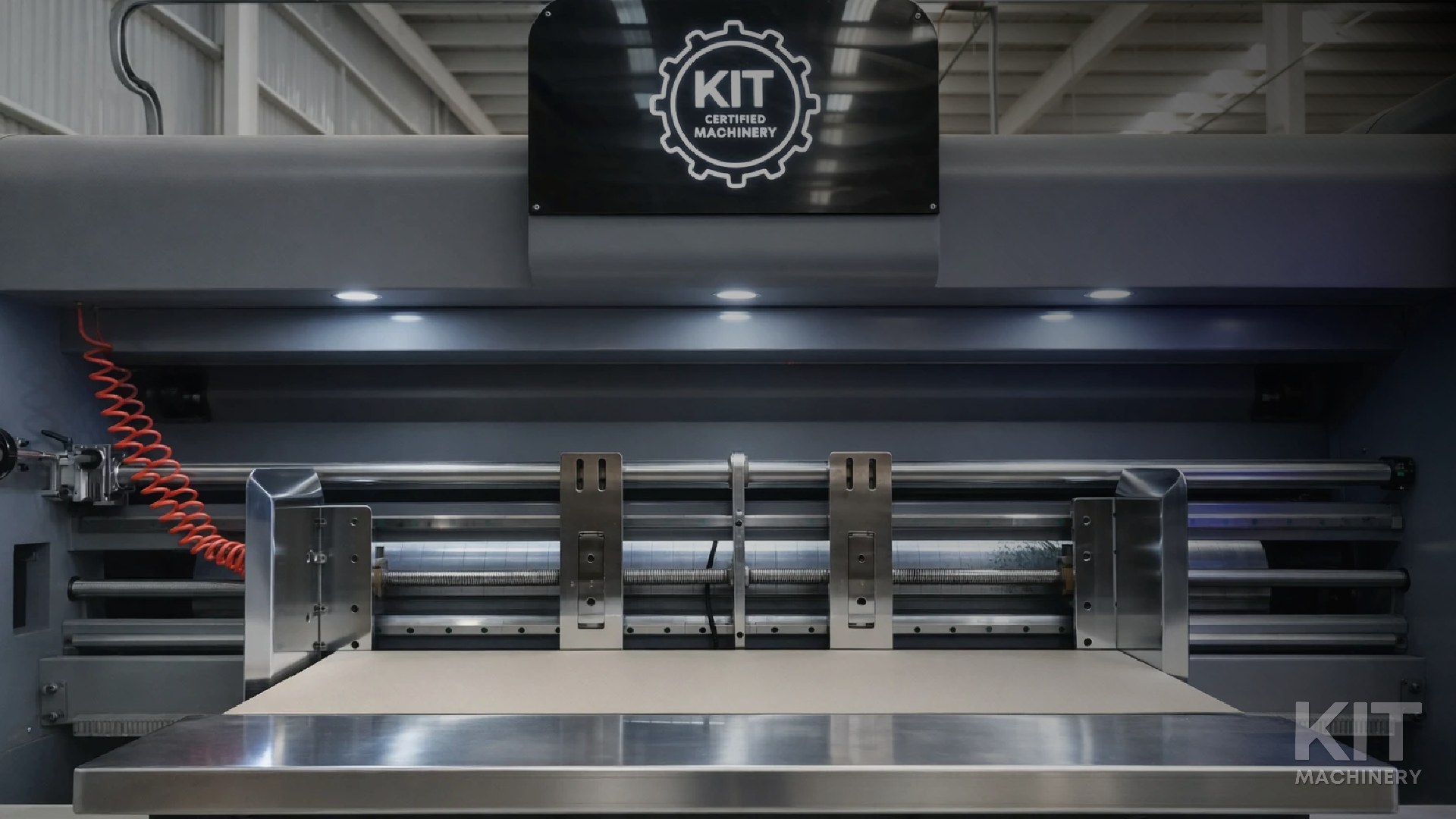
An automatic suction-feed flexo printer, such as the Model 1971, is designed for plants that require higher speed, better stability, and more consistent print quality.
This type of machine can be configured with:
automatic suction feeder;
one to three printing colors;
slotter;
die-cutting section;
hybrid slotter;
Stacker at the end of the line.
The key difference compared to a chain-fed machine is the feeding system. With suction feeding, sheets enter the machine in a more controlled and stable way, improving process precision.
For high-speed flexographic solutions, you can explore our Flexo Printer 1971 High Speed.
Maximum speed vs. average operating speed
An automatic suction-feed flexo printer can reach a maximum speed of 180 boxes per minute.
However, in real production, many customers operate this type of machine at an average speed of 120 to 130 boxes per minute, achieving a strong balance between speed, print quality, and cutting quality.
Estimated production per shift
At 120 boxes per minute:
120 boxes/min x 60 minutes = 7,200 boxes per hour
7,200 boxes/hour x 8 hours = 57,600 boxes per continuous shift
At 130 boxes per minute:
130 boxes/min x 60 minutes = 7,800 boxes per hour
7,800 boxes/hour x 8 hours = 62,400 boxes per continuous shift
At the maximum speed of 180 boxes per minute:
180 boxes/min x 60 minutes = 10,800 boxes per hour
10,800 boxes/hour x 8 hours = 86,400 boxes per continuous shift
For production planning, it is usually better to use the average operating range as your baseline and keep the maximum speed as available capacity for highly controlled jobs.
When does an automatic suction-feed flexo printer make sense?
This type of machine is a strong option when your plant needs:
higher production volume;
better print quality;
more stable sheet feeding;
more consistent production;
a more professional operation;
The ability to handle larger orders.
It is also a good fit for companies that have outgrown semi-manual production and need a more reliable line to scale.
6. Flexo folder gluer: a fully automated line for high-volume production
A flexo folder gluer is a higher-level solution because it integrates several production stages into a single line. It does not only print or cut; it can also support folding, gluing, conveying, squaring, and strapping
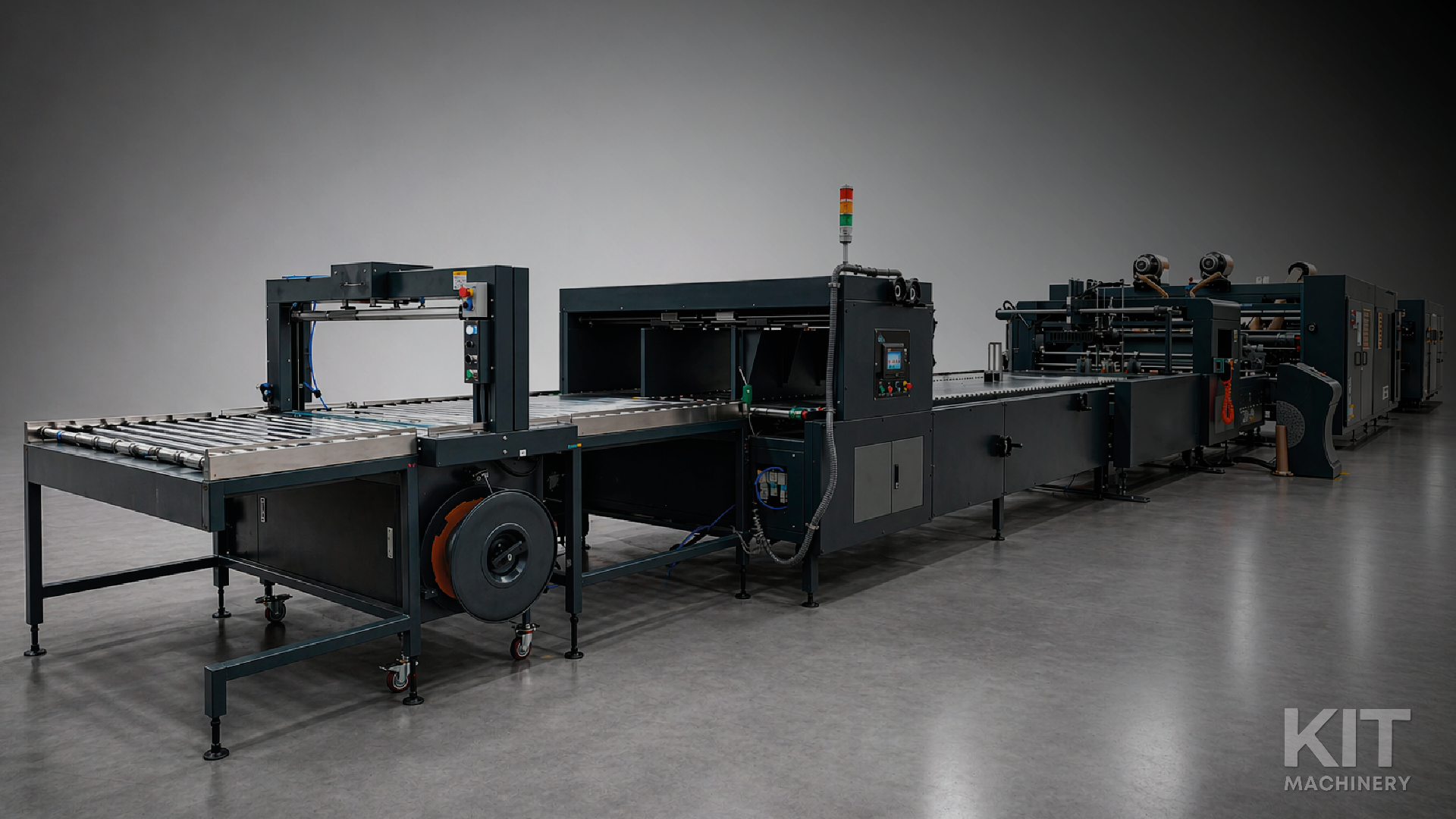
This type of configuration can include:
automatic feeder;
one to four printing colors;
rotary die cutter;
automatic creasing system;
doctor blade;
ceramic rollers;
folder gluer;
conveyor;
box squaring section;
double strapping machine.
The main advantage is that the line works as an integrated system. The folder gluer operates at the same pace as the flexo because it is controlled by PLC, allowing for a more continuous and automated process.
For automatic gluing solutions, you can also review our Automatic Folder Gluer KP-753 and External Folder Gluer KP-200.
Production capacity
With the right configuration, a flexo folder gluer can reach production levels of more than 220 boxes per minute.
This represents a much higher productivity level compared to manual or semi-automatic lines.
Estimated production per shift
At 220 boxes per minute:
220 boxes/min x 60 minutes = 13,200 boxes per hour
13,200 boxes/hour x 8 hours = 105,600 boxes per continuous shift
If the process remains stable, this type of line can theoretically exceed 100,000 boxes per shift. However, as with any industrial machine, the real output will depend on box type, setup changes, board quality, maintenance, and operational continuity.
When does a flexo folder gluer make sense?
A flexo folder gluer is ideal when your plant needs:
high-volume production;
less manual intervention;
integration of printing, cutting, folding, gluing, conveying, and strapping;
more consistent output;
better PLC-based control;
fewer bottlenecks between processes.
If your company already has steady demand and wants to scale production capacity, an automated line may be the best option.
7. Non-printing die cutters: productivity focused on cutting and forming
In addition to flexographic machines, non-printing die cutters can also provide strong productivity depending on the feeding system and installed accessories.
These machines are useful when the process does not require printing, but does require cutting, slotting, die-cutting, or forming.
Their productivity depends mainly on:
feeding system;
sheet size;
die-cutting complexity;
board type;
discharge speed;
installed accessories;
operator experience.
In practical terms, a non-printing die cutter can be a good option when the company needs to process boxes or corrugated pieces without printing, while maintaining good speed and cutting precision.
You can explore more options in our catalog of corrugated cardboard machinery.
8. How to calculate real production per shift
To estimate how many boxes a machine can produce, you can use this formula:
Boxes per minute x operating minutes = theoretical production
For example:
120 boxes per minute x 480 minutes = 57,600 boxes per 8-hour shift
However, to get a more realistic number, you should apply an operational efficiency factor.
For example:
Theoretical production x operational efficiency = estimated real production
If a machine has a theoretical capacity of 57,600 boxes per shift and operates at 80% efficiency:
57,600 x 0.80 = 46,080 estimated boxes per shift
This calculation helps you plan more accurately instead of assuming the machine will run at maximum speed throughout the entire shift.
9. Common mistakes when comparing machine speeds
Mistake 1: comparing only boxes per minute
A faster machine does not always produce more usable boxes if it requires more adjustments, stops more often, or is not properly configured for the job.
Mistake 2: ignoring the feeding system
Manual chain feeding depends heavily on the operator. Automatic feeding or suction feeding allows for greater stability and a more consistent pace.
Mistake 3: not considering integrated processes
A flexographic machine may print and cut, but a flexo folder gluer can integrate printing, cutting, folding, gluing, conveying, squaring, and strapping. That changes the productivity of the entire plant.
Mistake 4: focusing only on maximum speed
Maximum speed is useful as a reference, but production planning should be based on the average speed that maintains stable quality.
Mistake 5: forgetting the end of the line
If a machine prints quickly but stacking, gluing, or strapping is still manual, the bottleneck will simply move to the end of the process.
10. Which machine should you choose based on your volume?
If you produce up to 10,000 or 12,000 boxes per shift
A chain-fed flexographic machine may be enough, especially if you have experienced operators and need a flexible, accessible solution.
If you want to reach more than 50,000 theoretical boxes per shift
A chain-fed flexo with automatic feeder or an automatic suction-feed flexo printer can help you make the next productivity jump.
If you need more than 100,000 theoretical boxes per shift
A fully automated flexo folder gluer may be the best alternative, especially if you want to integrate printing, cutting, folding, gluing, conveying, squaring, and strapping in a single line.
If you do not need printing
A non-printing die cutter may be a good option, as long as the feeding and discharge configuration matches your expected production volume.
Frequently Asked Questions
Which flexographic machine is the fastest?
Among the options mentioned, the flexo folder gluer offers the highest production potential, with more than 220 boxes per minute depending on configuration and operating conditions.
Is a chain-fed flexographic machine slow?
Not necessarily. It can reach strong production volumes, but its speed depends more on the operator because the feeding process is manual. In efficient operations, it can produce around 10,000 to 12,000 boxes per 8-hour shift.
What is the advantage of suction feeding?
Suction feeding helps the sheet enter the machine in a more stable, aligned, and controlled way. This improves print registration, cutting precision, and overall production consistency.
Why would a 180 boxes-per-minute machine run at 120 or 130?
Because in real production, many plants prefer to operate at an average speed that maintains print quality, reduces errors, and avoids unnecessary stops. Maximum speed is usually reserved for jobs where the material, setup, and process are fully controlled.
What is better: an automatic flexo printer or a flexo folder gluer?
It depends on your process. If you need printing, slotting, and die-cutting at a stable speed, an automatic flexo printer may be enough. If you also want to integrate folding, gluing, conveying, squaring, and strapping, a flexo folder gluer offers a higher level of automation.
How do I know which machine my plant needs?
The best approach is to evaluate your current volume, projected orders, box types, number of colors, sheet formats, and desired automation level.
At KIT Machinery, we help corrugated packaging companies evaluate their production needs and select the right configuration for their operation. You can schedule a visit or explore our corrugated packaging machinery.
Conclusion
The number of boxes a flexographic machine can produce depends on much more than its maximum speed.
A chain-fed flexographic machine may be ideal for companies looking for flexibility and a more accessible investment. An automatic suction-feed flexo printer provides more stability and better quality for medium-to-high production volumes. A flexo folder gluer can take production to the next level by integrating multiple stages into one automated line.
The key is to choose the machine that fits your real operation, not just the highest number on a specification sheet.
At KIT Machinery, we help corrugated packaging manufacturers find the machinery, technology, and configurations they need to produce more, reduce bottlenecks, and grow with greater capacity.